

Introduction to Bit Planes
When people look at a digital image, they usually focus on colors, brightness, sharpness, or overall quality. What most users never realize is that every image is built from tiny layers of binary information working together behind the scenes. These layers are known as bit planes, and they play a major role in image processing, computer graphics, data compression, and even digital security.
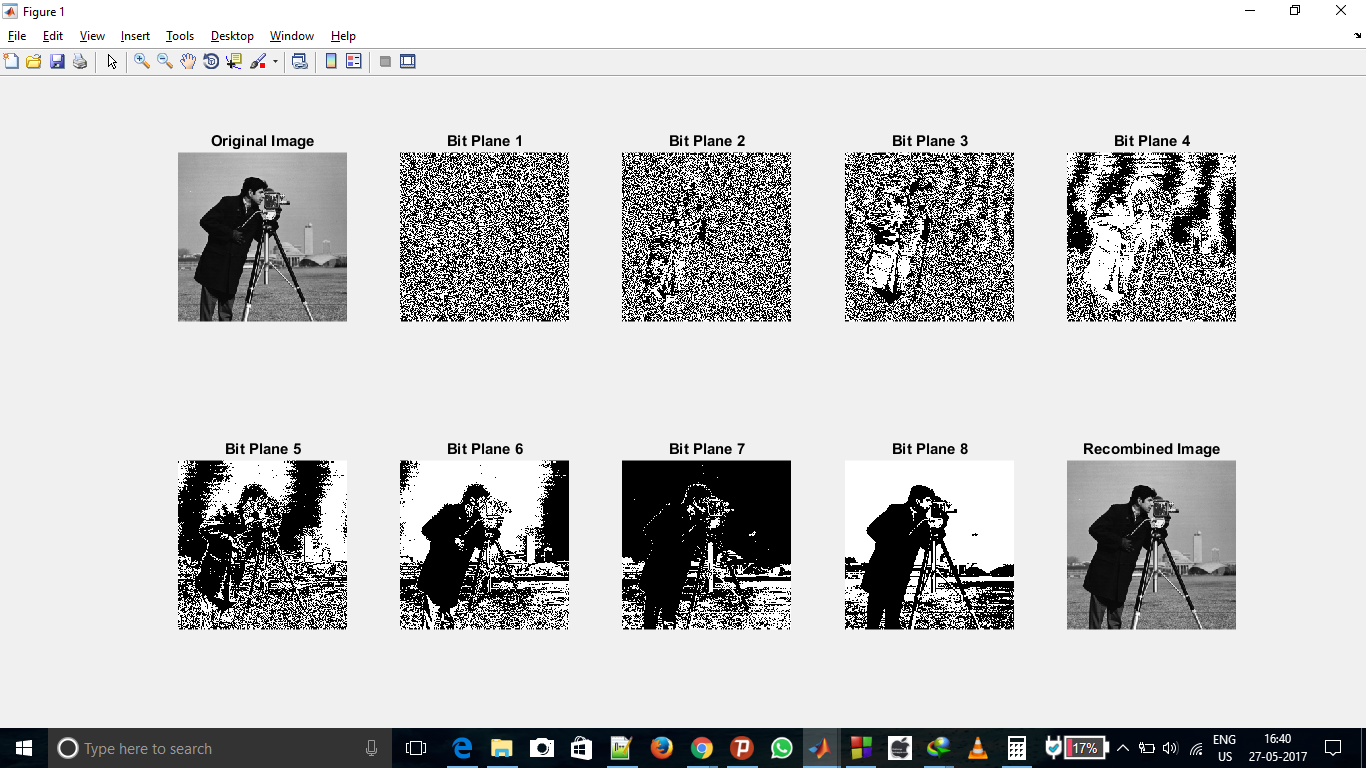
A bit plane refers to a set of bits that occupy the same position in every pixel of a digital image. Since computers store images in binary form, each pixel contains multiple bits representing intensity or color values. Instead of viewing the image as a whole number-based structure, bit-plane slicing separates the image into individual binary layers. Each layer contains one specific bit from all pixels across the image.
To understand this more clearly, imagine an 8-bit grayscale image. Every pixel in that image is represented using 8 bits. The first bit from every pixel forms one bit plane, the second bit forms another, and so on until all eight layers are created. Some of these layers carry more visual importance than others. The higher-order planes contain most of the meaningful image information, while lower-order planes usually contain finer details or noise.
Bit planes are extremely important in fields like image enhancement, image compression, steganography, pattern recognition, and computer vision. Engineers and researchers use them to isolate useful information, reduce storage size, and improve processing efficiency. Even though the concept sounds technical at first, bit planes are actually one of the most elegant examples of how computers break down complex visual information into manageable pieces.
Understanding the Basics of Bit Planes
Before diving deeper into advanced applications, it is important to understand how bit planes work at a fundamental level. Digital systems operate entirely using binary values, meaning every piece of information is represented using zeros and ones. Images are no exception.
In an 8-bit grayscale image, every pixel value ranges from 0 to 255. These numbers are stored in binary format. For example, the decimal value 145 becomes 10010001 in binary form. Each position in this binary number represents a specific bit level. When we separate all first bits from every pixel, we get one bit plane. Repeating the same process for every bit position creates multiple layers.
The highest-order bit plane is known as the Most Significant Bit (MSB). It contributes heavily to the visual appearance of the image. On the other hand, the Least Significant Bit (LSB) contributes very little to the visible structure. This distinction becomes incredibly useful in image analysis because it allows experts to prioritize important data while ignoring unnecessary information.
One fascinating aspect of bit planes is how visual quality changes across layers. If you display only the highest-order planes, the image still remains recognizable because these layers contain the core intensity information. However, lower-order planes often appear noisy or random because they mainly store minor variations. This property is widely used in compression techniques where less important planes may be discarded to reduce file size.
Bit-plane slicing also gives researchers a better understanding of image composition. By analyzing individual planes separately, patterns that are difficult to detect in the original image may become much easier to identify. This is particularly useful in medical imaging, satellite analysis, and forensic investigations where precision matters greatly.
Structure of Bit Planes in Digital Images
The structure of bit planes depends on the image type and bit depth. Different image formats use different numbers of bits per pixel, which directly affects how many bit planes exist within the image.
For grayscale images, the concept is relatively straightforward. An 8-bit image contains eight separate planes. A 16-bit image contains sixteen planes. Each plane contributes differently to the final visual output. The higher the bit depth, the more detailed the image becomes because additional planes allow finer intensity representation.
Color images are more complex because they typically use separate channels for red, green, and blue values. In a standard 24-bit RGB image, each color channel contains 8 bits. This means the image actually consists of 24 bit planes in total. Eight belong to red, eight belong to green, and eight belong to blue.
The organization of these planes significantly impacts image quality and processing efficiency. Higher-order planes contain dominant visual information such as shapes, edges, and large-scale structures. Lower-order planes store subtle texture variations and noise components. When researchers process images, they often focus only on the planes that matter most for a specific task.
Another interesting structural characteristic is redundancy. Some bit planes may contain repetitive patterns that can be compressed effectively. Compression algorithms exploit this redundancy to reduce storage requirements without heavily affecting visible quality. This principle forms the foundation of several modern image compression methods.
Bit-plane representation also improves computational flexibility. Instead of processing full pixel values directly, systems can manipulate selected layers independently. This targeted processing approach reduces complexity and speeds up certain operations, especially in large-scale image processing applications.
Importance of Bit Planes in Image Processing
Bit planes are a core component of digital image processing because they allow systems to analyze images at different levels of detail. This layered representation creates opportunities for enhancement, filtering, segmentation, and compression techniques that would otherwise be difficult to perform efficiently.
One of the biggest advantages of bit-plane processing is selective enhancement. Higher-order planes can be emphasized to improve image clarity while lower-order noise planes can be minimized. This technique is particularly valuable in medical imaging where small distortions may affect diagnostic accuracy.
Image segmentation also benefits greatly from bit-plane analysis. Since significant visual information is concentrated in upper planes, separating these layers can simplify object detection tasks. Computer vision systems often rely on this method to identify edges, patterns, and structural features more effectively.
Noise reduction is another important application. Lower-order planes frequently contain random variations introduced during image acquisition or transmission. By filtering or suppressing these planes, image quality can be improved without major loss of meaningful information. This process helps create cleaner and more stable visual outputs.
Bit planes also support efficient feature extraction. Researchers working in facial recognition, fingerprint analysis, and remote sensing often isolate specific planes to detect patterns that may not be visible in the original image. The layered approach makes data interpretation more manageable and computationally efficient.
Perhaps the most impressive aspect is flexibility. Different applications can prioritize different bit planes depending on their goals. Security systems may focus on hidden data in lower planes, while image reconstruction systems prioritize upper planes. This adaptability makes bit-plane technology highly valuable across multiple industries.
Bit Plane Slicing Explained
Bit-plane slicing is the process of separating an image into its individual bit layers. It is one of the most widely used techniques in digital image analysis because it reveals how different levels of binary information contribute to the final image appearance.
The process begins by converting pixel values into binary form. Each binary digit is then extracted and grouped with corresponding digits from all other pixels. This creates a set of binary images where each image represents one bit plane.
The higher-order planes are generally more meaningful visually. If you display only the top two or three planes, the image often remains recognizable because these layers contain most of the intensity information. Lower-order planes contribute finer details but may appear noisy or fragmented when viewed independently.
Bit-plane slicing helps researchers understand information distribution within an image. It becomes easier to identify which layers carry useful features and which layers mostly contain noise. This insight improves image enhancement and compression strategies significantly.
Another major benefit of slicing is data simplification. Instead of processing complex pixel values directly, systems can analyze simpler binary structures. This reduces computational overhead and enables faster algorithm performance in certain scenarios.
The technique is especially useful in pattern recognition systems. Since some patterns become more prominent in specific bit planes, analyzing layers individually can improve detection accuracy. Applications such as fingerprint recognition, industrial inspection, and biometric authentication often rely on this principle.
Bit-plane slicing may sound like a highly specialized process, but it is actually a practical tool used in countless digital technologies that people interact with every day.
Applications of Bit Planes in Real-World Technology
Bit planes are used in far more industries than most people realize. Their ability to separate image information into manageable layers makes them incredibly valuable in modern digital systems.
One of the most common applications is image compression. Compression algorithms analyze which planes contain the most useful visual information and prioritize them during encoding. Less important planes may be compressed heavily or discarded altogether to save storage space.
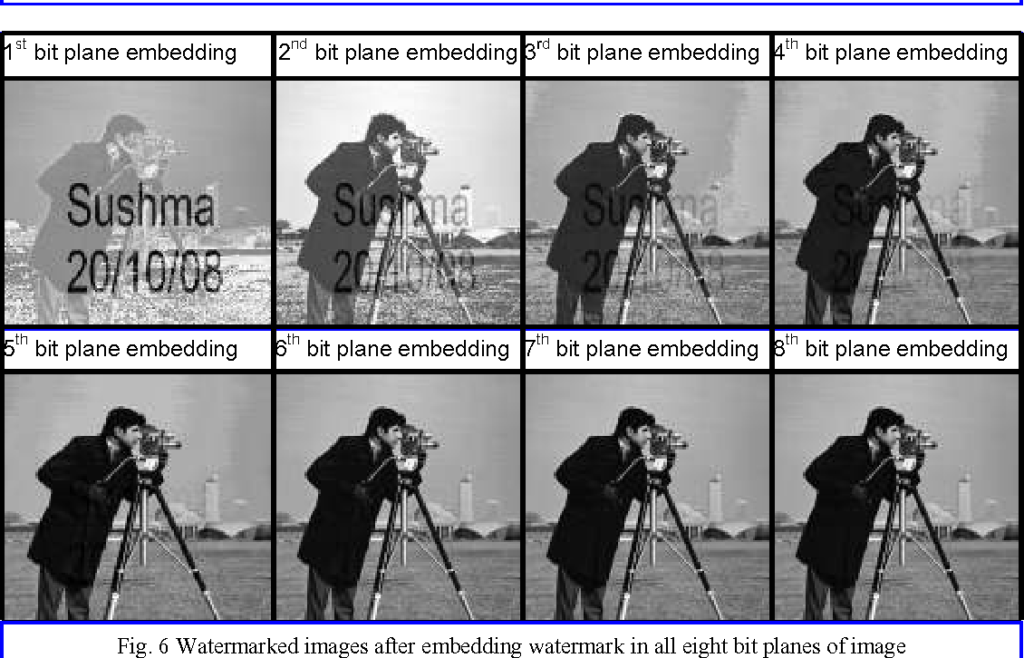
Steganography is another fascinating use case. Hidden messages or secret data can be embedded within lower-order bit planes without noticeably affecting image quality. Since human vision is less sensitive to small binary changes, these hidden modifications often remain invisible to the naked eye.
Medical imaging systems also benefit from bit-plane techniques. Doctors and radiologists rely on highly detailed scans where subtle image features matter greatly. Bit-plane analysis helps enhance important structures while minimizing irrelevant noise, improving diagnostic clarity.
Satellite imaging and remote sensing heavily utilize bit-plane processing as well. Environmental monitoring systems analyze specific planes to identify land patterns, vegetation changes, or water distributions. The layered structure simplifies large-scale data interpretation significantly.
In cybersecurity and digital forensics, bit planes help investigators detect manipulated images or hidden information. Altered images often show irregular patterns within certain planes, making forensic analysis more effective.
Artificial intelligence and machine learning systems also use bit-plane concepts for feature extraction. Simplified binary representations can improve training efficiency and reduce processing complexity in computer vision tasks.
These examples demonstrate that bit planes are not just theoretical concepts taught in classrooms. They are practical tools powering many technologies people use every single day.
Advantages of Using Bit Planes
One of the biggest strengths of bit-plane representation is flexibility. Since information is divided into layers, systems can focus only on the most relevant data instead of processing entire images unnecessarily. This selective approach improves efficiency in many applications.
Another advantage is reduced computational complexity. Binary operations are generally faster and simpler than full numerical calculations. Working with individual bit planes often allows systems to process images more efficiently, especially in hardware-based environments.
Bit planes also improve image understanding. By separating layers, researchers gain insight into how visual information is distributed across an image. This understanding supports better enhancement, segmentation, and compression techniques.
Storage optimization is another major benefit. Since higher-order planes contain most of the meaningful information, lower-order planes can sometimes be compressed aggressively without causing noticeable quality loss. This principle is widely used in multimedia systems.
The technique also supports advanced security applications. Hidden information can be embedded into lower planes without significantly affecting visible quality. This capability is useful in watermarking, copyright protection, and secure communication systems.
Bit-plane methods are highly adaptable as well. Different industries use them differently depending on their objectives. Some applications prioritize visual quality, while others focus on hidden data extraction or noise reduction.
Perhaps most importantly, bit planes create a structured approach to image analysis. Instead of treating images as massive collections of random numbers, systems can organize and process information systematically. This layered perspective greatly improves both analytical accuracy and computational performance.
Challenges and Limitations of Bit Planes
Despite their many advantages, bit planes also come with certain limitations and challenges. Understanding these issues is important for anyone working in digital image processing or computer vision.
One challenge is information loss. If too many lower-order planes are removed during compression, subtle details may disappear. While the image might still look acceptable visually, important fine structures could be lost permanently.
Noise sensitivity can also become problematic. Lower-order planes frequently contain random noise introduced by sensors or transmission errors. Distinguishing between useful details and unwanted distortions is not always straightforward.
Another limitation is increased processing complexity in some cases. Although binary operations themselves are simple, managing multiple planes separately can increase algorithmic overhead. Systems must carefully balance efficiency and accuracy.
Bit-plane analysis may also produce misleading interpretations if not applied correctly. Some important image details may exist in lower planes, especially in high-precision imaging systems. Ignoring these layers completely can reduce analytical reliability.
Storage requirements can become large during intermediate processing stages as well. Separating images into multiple binary layers sometimes increases temporary memory usage, particularly when dealing with high-resolution images.
Security applications involving bit planes face additional challenges. Hidden data embedded in lower planes can sometimes be detected by advanced forensic tools. This creates an ongoing competition between steganography techniques and detection algorithms.
Even with these limitations, bit planes remain one of the most powerful tools in digital image representation. Most challenges can be managed effectively through proper algorithm design and careful implementation strategies.
Future of Bit Plane Technology
As digital imaging technologies continue evolving, bit-plane techniques are becoming even more important. Modern systems generate massive amounts of visual data, and efficient processing methods are essential for handling this information effectively.
Artificial intelligence is expected to drive major advancements in bit-plane analysis. Machine learning algorithms can automatically identify which planes contain the most valuable information for specific tasks. This adaptive approach may significantly improve image recognition and classification systems.
Quantum imaging and advanced sensor technologies could also expand the role of bit planes in future research. Higher-resolution imaging systems will likely rely on more sophisticated layered processing techniques to manage enormous data volumes efficiently.
In cybersecurity, bit-plane methods may become increasingly important for authentication and anti-counterfeiting technologies. Digital watermarking systems are already evolving rapidly, and future methods may use dynamic bit-plane manipulation for enhanced security.
The entertainment industry is another area with strong potential growth. High-definition video, virtual reality, and augmented reality systems all require efficient image processing strategies. Bit-plane optimization may help reduce bandwidth and storage demands while maintaining visual quality.
Medical technology is expected to benefit greatly as well. Advanced diagnostic imaging systems may use intelligent bit-plane enhancement techniques to detect diseases earlier and more accurately than current methods allow.
Even though the concept of bit planes has existed for decades, researchers continue finding new applications and improvements. This demonstrates how foundational technologies often remain relevant far longer than expected when they solve fundamental computational problems effectively.
Conclusion
Bit planes may seem like a highly technical concept at first glance, but they are actually one of the foundational building blocks of digital image processing. By separating images into binary layers, computers gain a more organized and efficient way to analyze visual information.
From compression and enhancement to cybersecurity and artificial intelligence, bit planes support countless modern technologies. Their layered structure allows systems to focus on important information while minimizing unnecessary processing. This makes digital operations faster, smarter, and more adaptable.
Understanding bit planes also provides deeper insight into how digital images truly work behind the scenes. Every photo, scan, or video frame is ultimately a collection of binary data arranged across multiple layers. Bit-plane analysis simply exposes that hidden structure in a meaningful and practical way.
As technology continues advancing, the importance of bit planes will likely grow even further. Future innovations in AI, imaging, security, and multimedia systems will continue building upon the same fundamental principles that bit-plane representation introduced decades ago.
In many ways, bit planes represent the perfect example of how simple binary concepts can power incredibly sophisticated digital experiences. Behind every clear image and every advanced visual system, these hidden layers quietly continue doing their job.